The Emergence of Film Noir: Phantom Lady (1944)

What’s the first film noir? The Maltese Falcon (1941) is most often given that honor, but you can make a strong case for Fritz Lang’s You Only Live Once (1937) and the obscure B-movie Stranger on the Third Floor (1940). The latter is the one film historians most often tag as the first “true” film noir.

Whatever its starting point, 1944 is the year when film noir emerged as a major cinematic style. (I prefer Alain Silver’s designation of film noir as a style rather than a genre.) Nobody knew the term film noir yet; it would take post-War French critics to recognize the changes in the Hollywood crime film and give it a beautiful name. But the success of several stylish psychological melodramas in 1944 created the phenomenon that would extend to the end of the next decade. Double Indemnity, Laura, and Murder, My Sweet are among the big titles of the 1944 film noir wave and were three of the movies that inspired French film critic Nino Frank to coin the term film noir two years later.

But the first film noir to reach screens in 1944 was Phantom Lady, a work from two influential figures in the style: director Robert Siodmak and writer Cornell Woolrich, author of Phantom Lady’s 1942 source novel and the most important writer of literary noir. Add Siodmak’s expressionist visuals to Woolrich’s existential urban suspense tale and you have film noir fully realized. The film’s success boosted Siodmak to A-list director status after work in programmers, and it made Woolrich into a hot property for Hollywood studios, with twenty more feature film adaptations during the classic noir cycle.

Continue reading “The Emergence of Film Noir: Phantom Lady (1944)”

Download “An Acolyte of Black Spires” in a Standalone Edition

You can now download my award-winning short story “An Acolyte of Black Spires” as a digital standalone. This is the first time I’ve made the story available outside of Writers of the Future Vol. XXII, where it originally debuted. It serves as a (less direct) prologue to Turn Over the Moon, introducing key ideas and supporting characters, so it another way you can prepare yourself for the full epic coming in October.

The new digital edition features another stunning cover by Robert Zoltan:

One Step Closer: The Advance Reviewer Copy Arrives

Delivered to my doorstep today: my personal copy of the advance review copy (ARC) of Turn Over the Moon. This is the first time I have gotten the change to hold an actual professional printed copy of my novel, and it looks fantastic:

cover-of-turn-over-the-moon-advance-reader-copy

The final version will feature only a few changes: typo corrections, a different back cover, and of course removing the “Not for Resale” bar that appears on all ARCs. The interior layout is stylish and beautiful, and the two-page map spread is a marvel. Robert Zoltan drew the map based on my messy sketches. No map reveal, yet, sorry! You’ll have to wait to read the book.

Onward toward November!

Get “Farewell to Tyrn” for Free to Prep for Turn Over the Moon!

We’re on track to have Turn Over the Moon released in October (the advance reviewer copies have already gone out). To help celebrate—and to help prepare you for some of the thrills ahead—we’re offering free digital copies of “Farewell to Tyrn,” the novelette that first introduced heroine Belde and her sidekick dinosaur Rint. This is the direct prologue to Turn Over the Moon, and you can receive a free copy (PDF, mobi, epub) if you sign up for the Dream Tower Media newsletter. Which you would want to do anyway, because Dream Tower doesn’t just product quality books, but also podcasts and radio dramas. You’ll also receive alerts for Turn Over the Moon as well as other upcoming goodies.

Continue reading “Get “Farewell to Tyrn” for Free to Prep for Turn Over the Moon!”

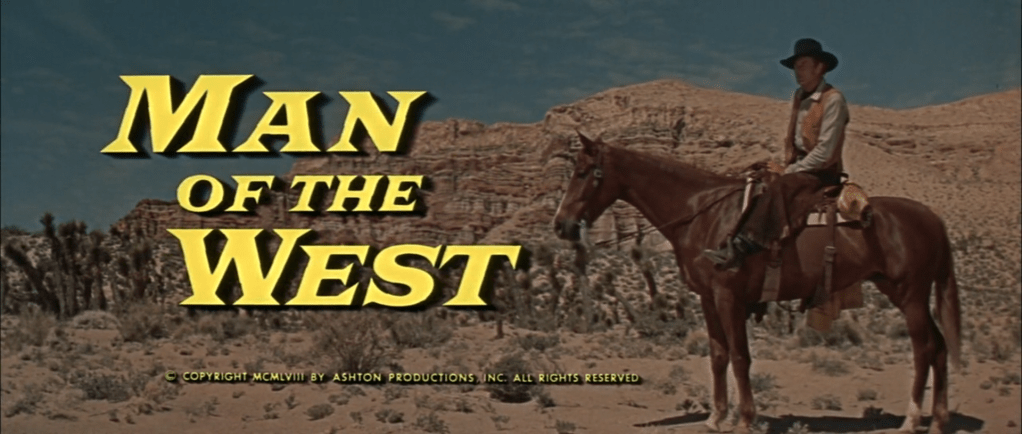
Western Noir: Man of the West

I never made a better investment in a streaming service than subscribing to the Criterion Channel when it premiered last April. Criterion Channel is the streaming platform extension of the Criterion Collection, the famous home video line of high quality classic and contemporary films. The Criterion Channel library contains great films of every era, genre, and country. I’ve mostly watched their cult films (glad I got to experience Demon Seed, God Told Me To, and Phase IV, because … wow, those are nuts) and classic Hollywood movies, in particular the deep dives they take into film noir. Since signing up for Criterion, my knowledge of film noir feels like it’s doubled.

This month Criterion Channel is presenting a topic that’s personal for me: the influence of film noir on the Hollywood Western. Film noir was not recognized as a genre during its main period of the 1940s and ‘50s. It was French critics who first used the term as they started to study the US-American crime films they had missed during World War II. Not until the 1970s, after the original noir moment was long over, did the phrase “film noir” become established in the movie lexicon. Whether film noir is a genre or not is still a hot topic of debate among film scholars. I like Alain Silver’s definition of it as a “style” rather than a genre. That definition helps to understand how noir influenced an established genre, the Western, that would seem to have nothing in common with it. What we might call the “Western noir” isn’t as much a transplanting of crime film tropes into the Western as it is the dark style and troubled psychology of film noir affecting common Western stories. The two film types do have one important element they share: most are about crime, and often the criminal is the protagonist.

Continue reading “Western Noir: Man of the West”